Occupied time feels shorter. What that means for your tables.
A 1985 study of queues explains why the wait for food can make or break an evening, and why giving guests something to do changes how the whole visit feels.
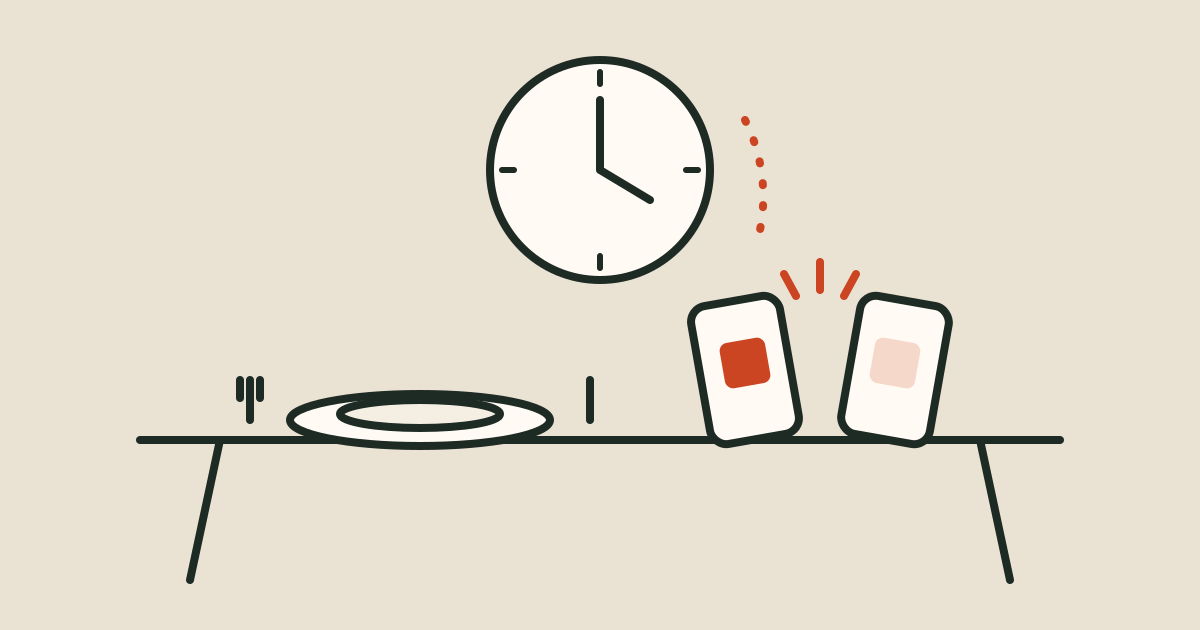
Every evening in a restaurant has gaps: between sitting down and ordering, between ordering and the food arriving, between the last plate and the bill. Guests rarely mention them. But they colour how the whole visit feels.
The psychology of waiting
In 1985, David Maister wrote “The Psychology of Waiting Lines”, an essay that’s still widely cited in service design. He set out eight propositions about why some waits feel longer than others. The first is the one hospitality knows by instinct:
Occupied time feels shorter than unoccupied time.
Maister quoted the psychologist William James: “Boredom results from being attentive to the passage of time itself.” When guests have nothing to do, they notice every minute. When they’re occupied, the same minutes pass without comment.
His restaurant examples are familiar: handing out menus to people waiting for a table, and turning the waiting area into a bar. Both make the wait feel shorter, and the bar earns money while doing it.
Three more that matter at the table
Several of Maister’s other propositions fit the wait for food:
- Uncertain waits feel longer than known, finite ones. “Your food’s about ten minutes away” feels shorter than silence.
- Anxiety makes waits feel longer. Guests who wonder whether their order has been forgotten count the minutes.
- Solo waits feel longer than group waits. A table that’s chatting and laughing barely notices the time. A table where everyone’s quietly on their own phone does.
The families problem
For families, the wait is the hard part. Children run out of patience long before the kitchen runs out of tickets. Parents spend the gap managing them, and a stressful wait can shape the whole meal, however good the food.
Many parents hand over a phone for some peace. It works, but it’s a solo activity, so the table goes quiet and the evening feels like separate people sharing a table.
What good table time looks like
Maister’s advice was that the best way to fill a wait is with something that has value of its own and connects to the service that follows. For a table waiting on food, that suggests something:
- Shared, not solo. Something the whole table does together, so the gap feels like part of the evening.
- Short. It should fit the wait and stop when the food arrives.
- About you. In your branding, or better still about your venue, so the time spent waiting still feels like your place.
- Optional. Guests who’d rather talk should be left in peace.
Turning the wait into a reason to return
There’s a bonus for the venue if the time guests spend waiting leads to something. A table that plays a quick game while the food is cooking has had a better wait. If one of them wins an offer for a quiet night next month, the wait has also produced their next visit.
That’s what Clink’s games are designed for: short, shared games on guests’ own phones, in your branding, with the chance of an offer that brings them back.
Sources
- The Psychology of Waiting Lines (1985)David H. Maister