Measure what comes back through the door
Most venues know how busy last Saturday was. Few know how many guests came back because of something they did. Here’s how to measure it.
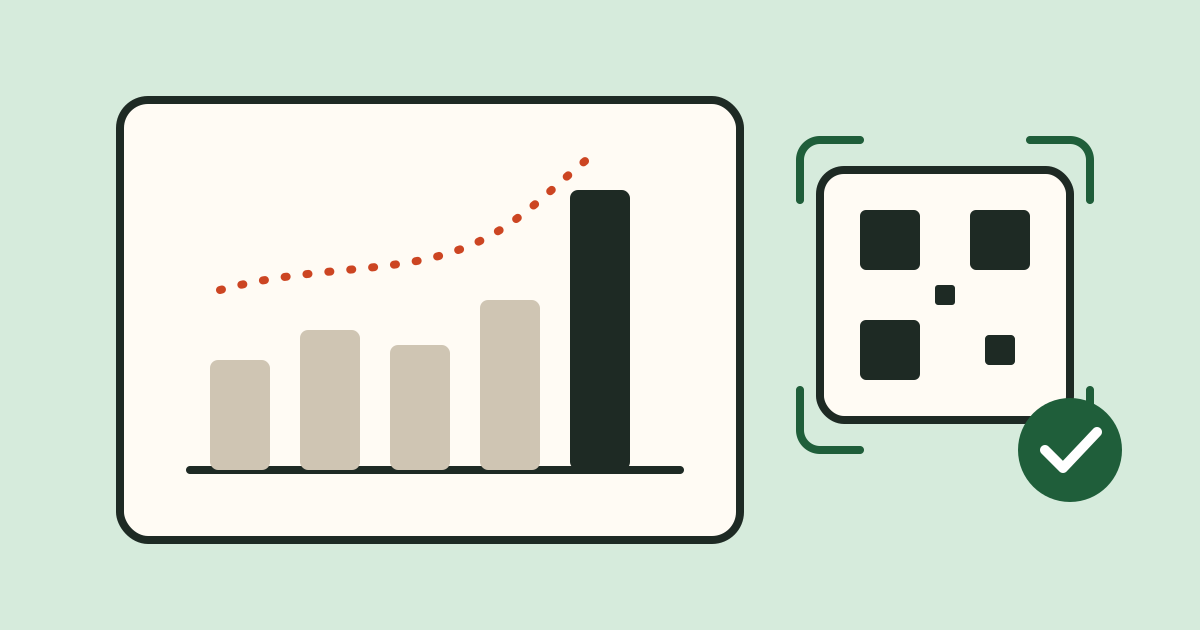
Hospitality is full of numbers: covers, spend per head, gross profit, wage percentage. The one that’s hardest to see is often the one that matters most: how many guests came back, and why.
Defections are a warning sign
Reichheld and Sasser’s 1990 research in the Harvard Business Review made a point that’s easy to miss: defection rates are an accurate leading indicator of profit swings. In other words, when customers quietly stop coming back, profit follows them down, usually before anything shows up in the accounts.
Most venues can’t see defections at all. A regular who stops coming doesn’t send a note. They just aren’t there any more.
Three things worth counting
You don’t need a data team to start. Three numbers tell you most of what you need:
- Offers given out. How many guests left with a reason to come back.
- Offers redeemed. How many came back and used it, and on which days.
- Guests you can contact. How many have agreed to hear from you, so you can invite them back when you need to.
The ratio of redeemed to given out is your return rate. Watch it by night and by offer, and you’ll soon see what works on a Tuesday and what doesn’t.
Make redemptions countable
Paper vouchers are easy to give out and almost impossible to count. They get binned, forgotten or accepted without anyone writing them down. Discount codes typed into a till fare better, but only if staff use them every time.
The simplest fix is to make redemption a single action that records itself. A code that staff scan when a guest uses it gets counted every time, and needs no training beyond “scan it”.
Build a list you own
Social media followers belong to the platform. A list of guests who’ve chosen to hear from your venue belongs to you. It’s also the cheapest way to fill a quiet night: you already know these guests like you.
Email still earns its keep. The DMA’s Marketer Email Tracker 2026, a survey of UK marketers, reported that email’s return on investment rose from just over £38 to almost £41 for every £1 spent. The DMA itself notes that inflation affects how to read that rise, and these are marketers’ own estimates rather than audited figures. Still, few channels come close.
Two rules matter. Guests must have clearly agreed to hear from you, and every email needs an easy way to unsubscribe. A small list of guests who want your news beats a big one that doesn’t.
Close the loop
Measuring return visits turns guesswork into a plan:
- Give out offers that are valid on the nights you need.
- Count the ones that come back.
- Keep the guests who opted in, and invite them back when it’s quiet.
- Next season, repeat what worked and drop what didn’t.
Clink’s dashboard is built around this loop. It shows plays, prizes issued and redemptions per venue (or across a group), and the email addresses of guests who’ve opted in, ready to export.
Sources
- Zero Defections: Quality Comes to Services (Harvard Business Review, 1990)Frederick F. Reichheld and W. Earl Sasser Jr., via Bain & Company
- From opens to outcomes: how email measurement is evolvingDMA, on the Marketer Email Tracker 2026